
What is Generative AI?
- Generative AI refers to algorithms that can create content ranging from text and images to music and videos
- This technology has gained substantial attention and application across various industries, including entertainment, marketing, and healthcare.
Engaging Hook & Introduction
Generative AI refers to algorithms that can create content ranging from text and images to music and videos. This technology has gained substantial attention and application across various industries, including entertainment, marketing, and healthcare.
Its capabilities enable businesses to automate content creation, foster creativity, and enhance user engagement. As the relevance of Generative AI continues to grow, it stands at the forefront of digital transformation, reshaping how we interact with technology and media.
Key Features of Generative AI
- Learning from Vast Datasets: Generative AI models undergo extensive training on large datasets, enabling them to understand complex patterns and structures inherent in the data. This learning helps the models to generate content that is coherent and contextually relevant.
- Content Generation Process: Technologies such as Generative Pre-trained Transformers (GPT) and Generative Adversarial Networks (GANs) utilize different methodologies to produce content. GPT models focus on predicting text sequences based on input prompts, while GANs involve a two-part system where a generator creates data and a discriminator evaluates its authenticity, leading to high-quality outputs.
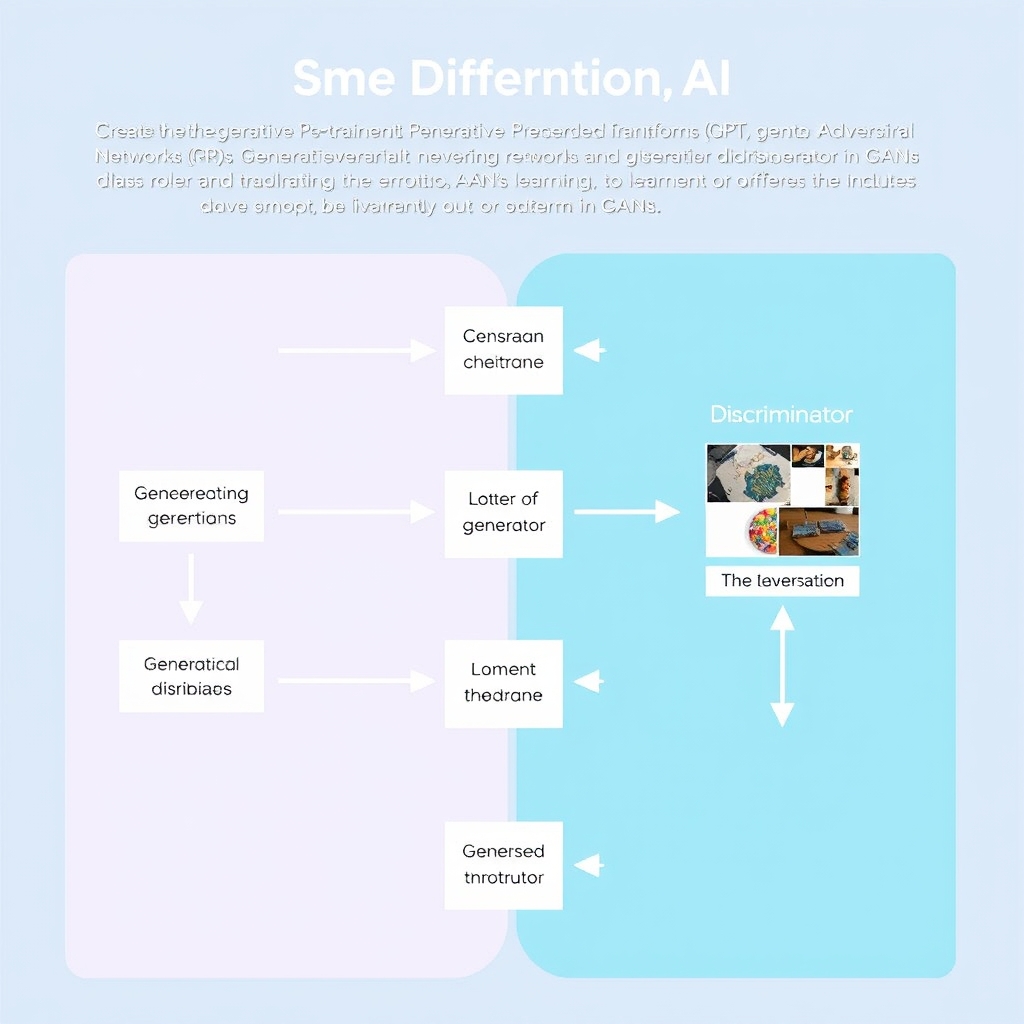
The content generation process of Generative AI models showcasing GPT and GAN methodologies.
- Adaptability in Applications: Generative AI’s versatility allows it to be applied across various fields, from art and music creation to simulation in gaming and deepfake technology. Its ability to tailor outputs for specific contexts enhances its utility in both creative domains and practical applications.
Real-World Applications
Generative AI is revolutionizing multiple sectors through innovative applications.
- Creative Fields: In art and writing, tools like AI-generated paintings and story generators enable creators to explore new styles and concepts, enhancing their creative processes.
- Business: In marketing and product design, companies leverage generative AI to create personalized advertisements and streamline product development, leading to highly tailored consumer experiences.
- Healthcare: Recent advancements allow for developing personalized treatment plans based on patient data, while in education, adaptive learning platforms adjust to individual student needs, fostering a more effective learning environment.
These applications showcase the versatility of generative AI and its potential to reshape various aspects of our daily lives.
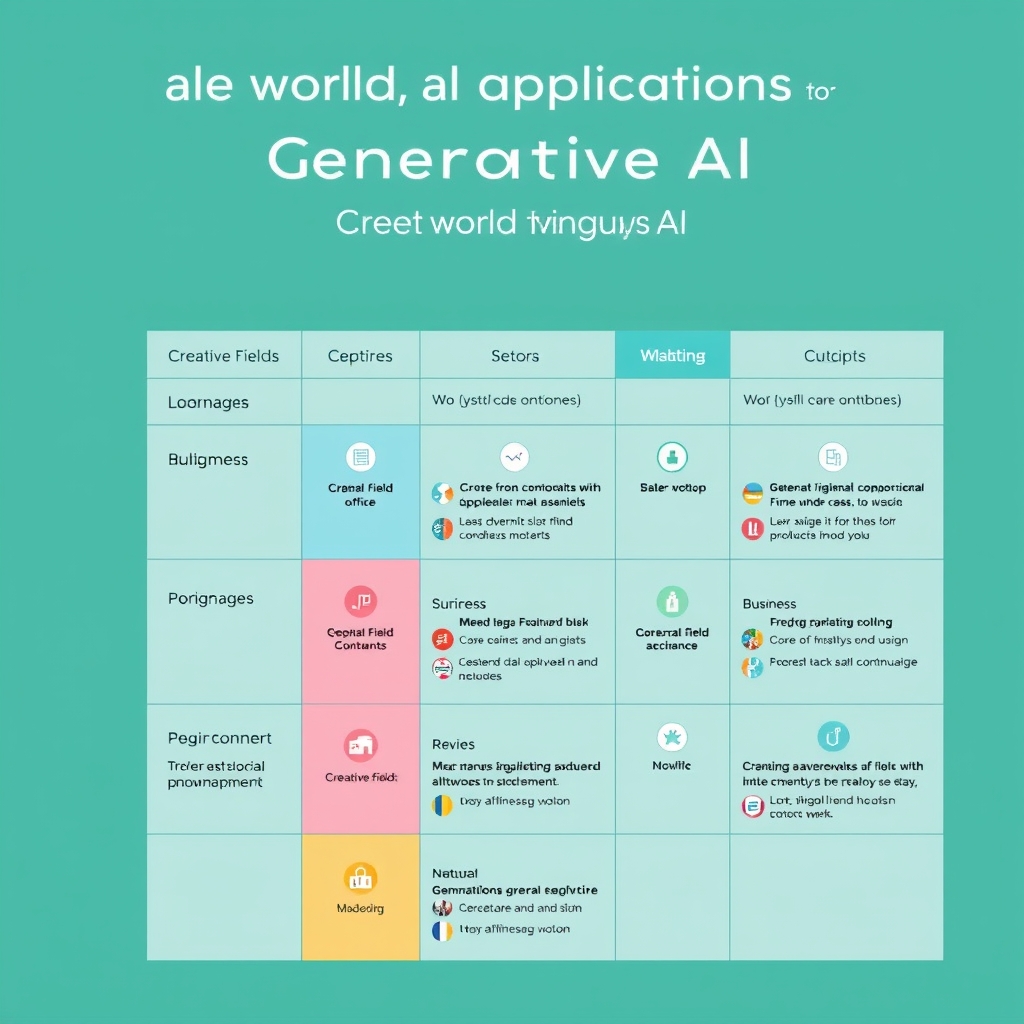
Real-world applications of Generative AI across sectors such as creative fields, business, and healthcare.
Conclusion & Call to Action
- Transformative Impact: Generative AI is reshaping industries, enhancing creativity, and changing how we approach problem-solving.
- Stay Informed: It is crucial for readers to keep up with advancements in AI, as they impact various aspects of life and work.
- Learn More: We encourage you to delve deeper into AI topics, explore resources, and engage with the community to harness its potential effectively.