

How to Implement AI Workflow Automation in Enterprise Systems
Quick Summary Enterprises want to automate repetitive work but face challenges integrating AI into existing systems.A structured, phased approach enables smooth AI deployment without disrupting operations.Start by identifying high-volume manual tasks like data entry, reporting, support requests, and ticket management.Map workflow
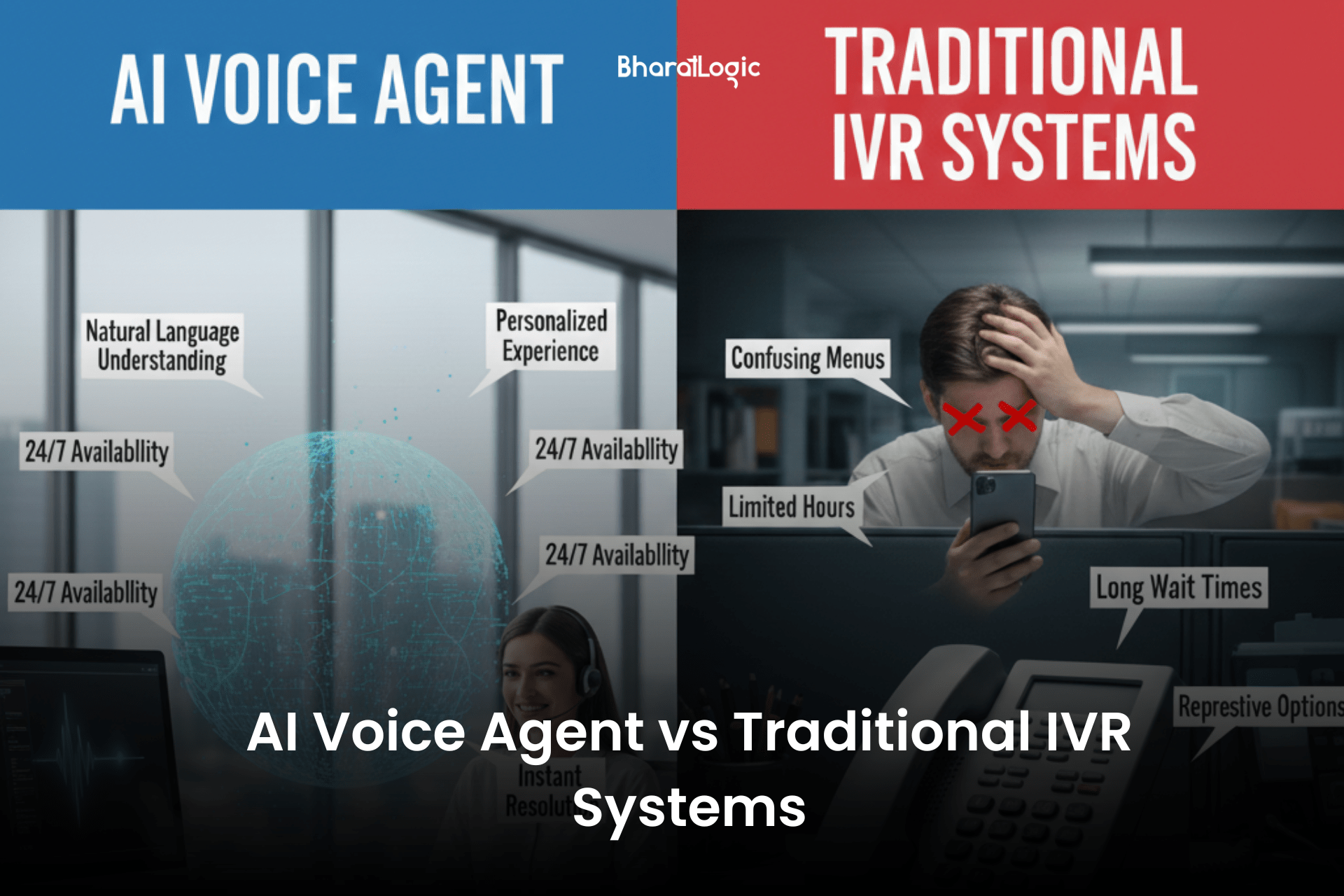
AI Voice Agent vs Traditional IVR Systems: What Enterprises Should Choose in 2026
Quick Summary: IVR uses keypad inputs and mainly routes calls, often causing frustration. AI Voice Agents understand speech, handle tasks, and provide natural conversations. AI reduces wait times, improves first-call resolution, and lowers manual workload. Best for high call volumes, repetitive requests, and appointment

AI Agents and Voice AI for Enterprise Automation in 2026
Enterprises today are operating in an environment of increasing complexity. Customer expectations are rising, service channels are expanding, and internal systems must handle larger volumes of data and requests than ever before. Across customer support, operations, sales, and back-office functions,
AI Go-to-Market Reality Check | Is Your AI Product Ready to Sell
Building an AI product is undeniably exciting. The algorithms work, the models perform well, and the solution feels genuinely intelligent. However, excitement and technical excellence alone rarely guarantee success. Many founders invest months sometimes years perfecting their AI, only to

AI in Healthcare Operations and Clinical Workflows | 2026 Guide
Healthcare organizations are under increasing pressure as patient demand continues to rise, workforce shortages persist, and operational costs grow year after year. These challenges are forcing hospitals and clinics to rethink how care is delivered while maintaining quality, safety, and

How AI Voice Agents Are Replacing Call Centers
Over the past two decades, I have watched customer support transform from bustling call floors filled with ringing phones to streamlined, digital-first solutions. This shift hasn’t happened overnight it’s the result of changing customer expectations, growing operational pressures, and rapid
What Founders Should Know Before Integrating AI into Products
AI is undeniably ubiquitous today, making its way into almost every new product, pitch deck, and startup. From personalized shopping recommendations to automated customer support, AI promises to revolutionize industries across the board. As a result, many founders feel compelled

Why Smart Businesses Embrace Digital Intelligence in 2025
For years, companies focused on the need to go digital. Building websites, mobile apps, and Customer Relationship Management (CRM) systems became essential to staying competitive. This digital shift helped many businesses establish an online presence and improve their operations. However,

How Smart Companies Build AI Products Without Big Teams
Many companies are eager to leverage AI to stay competitive, but building a robust internal team of data scientists, machine learning engineers, and developers can be both time-consuming and expensive. Hiring and onboarding skilled professionals often takes months, not to

How AI Agents are Revolutionizing Healthcare and Medical Solutions
Modern healthcare is overwhelmed growing patient volumes, clinician burnout, administrative bloat, and uneven access to care. Traditional digital tools aren’t enough. What’s needed is intelligent, adaptive, and assistive technology that understands clinical workflows. Enter AI agents: autonomous systems designed to perceive,