AI Voice Agent vs Traditional IVR Systems: What Enterprises Should Choose in 2026
Quick Summary:
- IVR uses keypad inputs and mainly routes calls, often causing frustration.
- AI Voice Agents understand speech, handle tasks, and provide natural conversations.
- AI reduces wait times, improves first-call resolution, and lowers manual workload.
- Best for high call volumes, repetitive requests, and appointment scheduling.
- Implementation requires workflow review, secure system integration, and pilot testing.
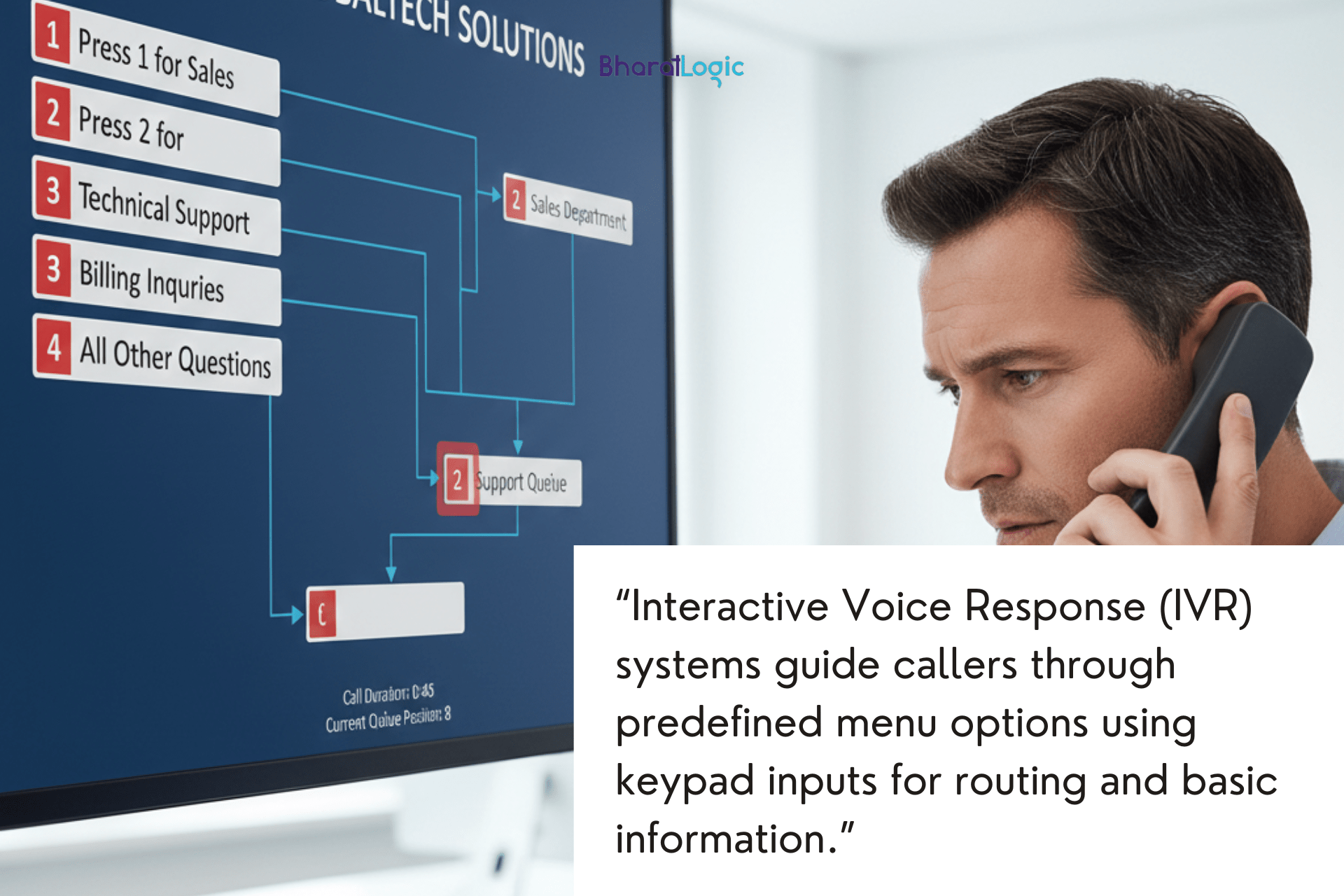
Many enterprises continue to depend on traditional Interactive Voice Response (IVR) systems to manage their incoming calls. IVR systems are designed to route calls efficiently by guiding callers through a series of menu options using keypad inputs. While this approach can help direct calls to the appropriate department or provide basic information, it often comes with significant drawbacks. Callers frequently experience long wait times, repeated menu navigation, and limited flexibility, which can lead to frustration and a negative perception of the organization’s customer service.
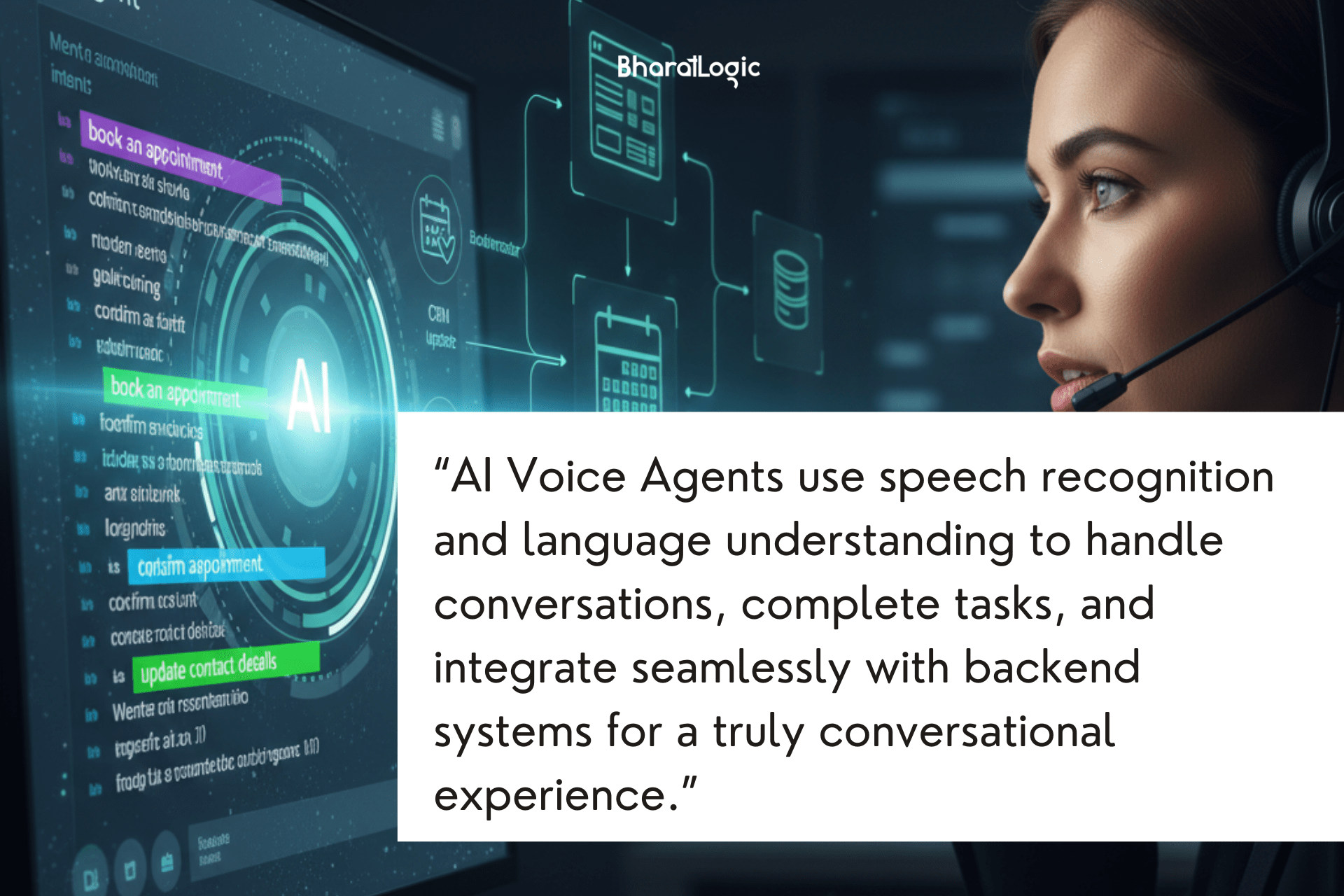
In contrast, AI Voice Agents are emerging as a more intelligent and adaptive alternative. Leveraging speech recognition and natural language understanding, these agents can comprehend caller requests, respond in a conversational manner, and even perform multi-step tasks such as capturing information, scheduling appointments, or updating backend systems during the call. Unlike IVR, AI Voice Agents do not rely on rigid menu structures, reducing the need for call transfers and improving first-call resolution.
For organizations evaluating customer support strategies, understanding the differences between IVR and AI Voice Agents is critical. Adopting AI-driven solutions can enhance the caller experience, reduce operational workload, and scale efficiently to handle high call volumes. Making an informed upgrade decision ensures both better customer satisfaction and more streamlined business operations.
What Is a Traditional IVR System

Interactive Voice Response systems guide callers through menu options using keypad inputs.
Typical IVR capabilities include:
- Guided Call Navigation: IVR systems direct callers through structured menu options using keypad inputs, helping them reach the right department or service quickly.
- Call Routing: They efficiently route incoming calls to appropriate agents or teams based on caller selections, reducing initial workload on human staff.
- Information Playback: IVR can provide prerecorded messages, instructions, or answers to frequently asked questions without requiring a live agent.
- Department Selection: Callers can choose departments or service areas through the menu, ensuring calls are filtered according to predefined organizational workflows.
- Automation Benefits: By handling routine tasks, IVR systems help streamline operations and maintain basic efficiency for high-volume call centers.
- Limitations: Traditional IVR cannot interpret caller intent beyond keypad inputs, making complex or multi-step queries difficult to resolve.
- Customer Experience Challenges: Rigid menu structures often frustrate callers, leading to repeated navigation, call transfers, or abandoned calls.
However, IVR systems cannot understand intent or handle complex conversations.
What Is an AI Voice Agent

AI Voice agents use speech recognition and language understanding to interact naturally with callers.
They can:
- Natural Interaction: AI Voice Agents leverage advanced speech recognition and natural language understanding to converse with callers in a human-like manner, removing the need for keypad inputs.
- Answer Questions: They can respond accurately to a wide range of inquiries, providing real-time information without transferring the call.
- Capture Details: AI agents efficiently collect caller information such as contact details, preferences, or service requests, ensuring accurate data capture for backend systems.
- Perform Multi-Step Actions: Unlike traditional IVR, AI Voice Agents can execute complex tasks during the call, such as booking appointments, updating accounts, or processing requests, without human intervention.
- Backend Integration: These agents seamlessly connect with CRM, ticketing, and other business systems, ensuring that information flows automatically and reducing manual effort.
- Enhanced Customer Experience: By handling conversations naturally and completing tasks in real-time, AI Voice Agents create a faster, more efficient, and satisfying customer experience.
This creates a more conversational experience.
Key Differences Between AI Voice Agents and IVR

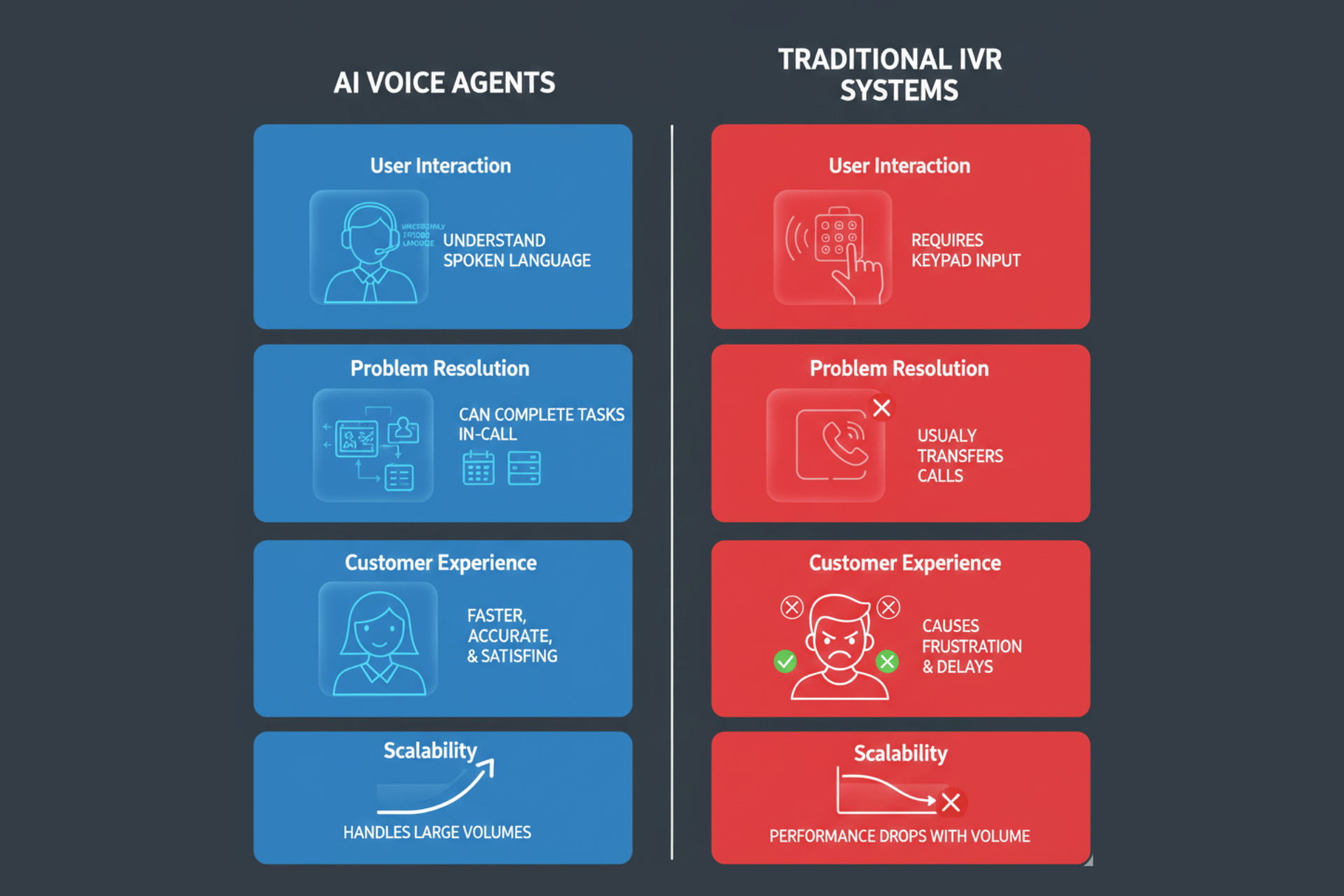
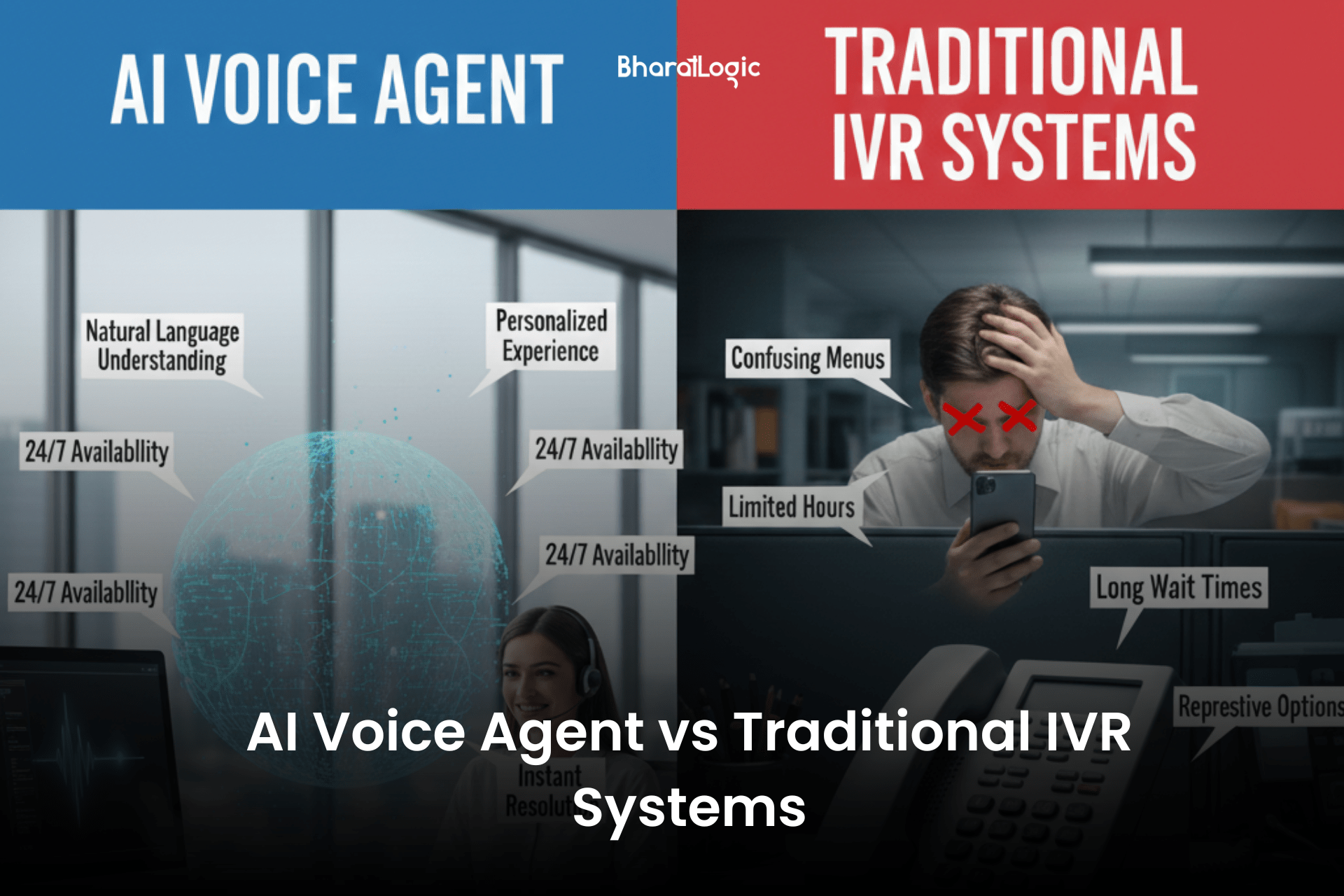
User Interaction: Traditional IVR systems rely on keypad inputs, requiring callers to navigate rigid menu options. In contrast, AI Voice Agents understand spoken language, allowing callers to interact naturally without memorizing menus.
Problem Resolution: IVR typically transfers calls to live agents for issues it cannot handle, which can increase resolution time. AI Voice Agents, however, can complete tasks during the call, such as updating accounts, booking appointments, or answering detailed questions, reducing the need for transfers.
Customer Experience: IVR systems often lead to frustration due to repeated menu navigation and slow resolutions. AI Voice Agents enhance customer satisfaction by providing faster, more accurate responses and personalized interactions.
Scalability: AI Voice Agents can manage large call volumes simultaneously without a drop in performance, making them ideal for enterprises with high support demands. IVR systems, while automated, cannot scale conversationally or adapt to complex caller needs efficiently.
AI Voice agents handle large call volumes without performance drop.
When Enterprises Should Upgrade

Organizations Handling:
- High Call Volumes: Enterprises that receive large numbers of daily calls can benefit from AI Voice Agents, which handle multiple conversations simultaneously without impacting performance.
- Repetitive Support Requests: Tasks such as FAQs, password resets, and status inquiries can be automated, freeing human agents for more complex issues.
- Appointment Scheduling: AI Voice Agents can manage bookings, confirmations, and reminders efficiently, reducing errors and ensuring timely follow-ups.
- First-Level Troubleshooting: Common technical or service issues can be addressed directly by AI, resolving problems quickly and minimizing the need for agent intervention.
Business Impact:
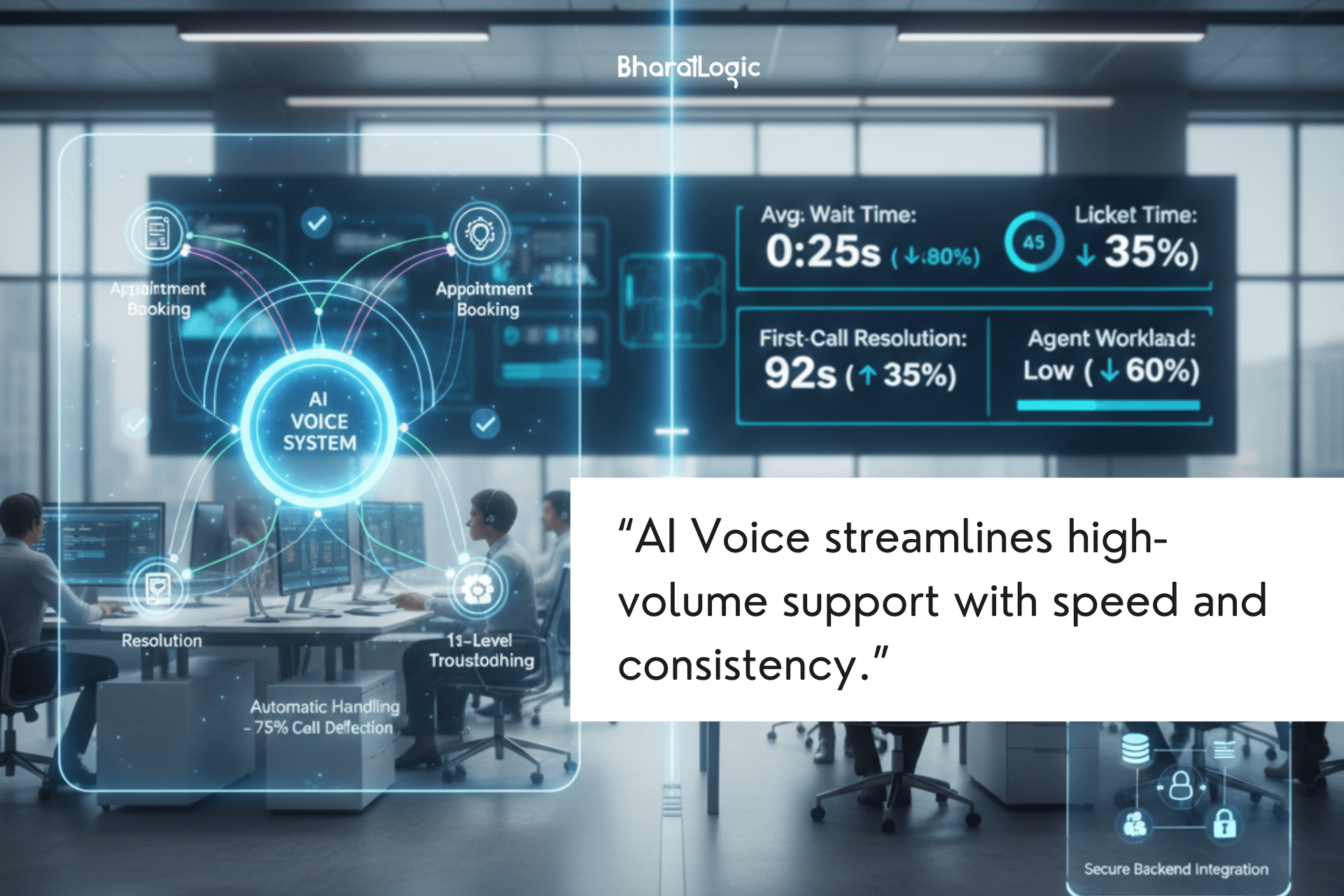
- Reduced Call Wait Time: Automation shortens hold times by handling straightforward queries immediately.
- Improved First-Call Resolution: Tasks completed in real-time reduce the number of transfers and callbacks.
- Lower Manual Workload: Human agents are relieved from repetitive tasks, allowing them to focus on higher-value interactions.
- Consistent Customer Service: AI ensures standardized, accurate responses, enhancing overall caller satisfaction.
Implementation Considerations:
- Review Existing Workflows: Identify areas where AI can add the most value.
- Identify Common Call Types: Focus on tasks suitable for automation.
- Secure System Integration: Ensure seamless connectivity with CRM and ticketing platforms.
- Pilot Deployments: Test and measure effectiveness before full-scale rollout to ensure smooth adoption and ROI.
Pilot deployments help measure effectiveness.
Conclusion
AI Voice Agents offer a more advanced and efficient alternative to traditional IVR systems. Unlike IVR, which relies on rigid keypad menus, AI Agents use speech recognition and natural language understanding to interact naturally with callers. They can answer questions, capture details, perform multi-step tasks, and integrate with backend systems like CRM or ticketing platforms. This automation reduces call wait times, improves first-call resolution, and frees human agents to focus on complex issues. Enterprises aiming to enhance service quality, streamline operations, and deliver a better customer experience should consider AI-driven call handling solutions as a scalable and intelligent upgrade over traditional IVR.
Frequently Asked Questions
1. What is the main difference between an AI Voice Agent and a Traditional IVR system?
Answer:
Traditional IVR (Interactive Voice Response) systems follow preset menus and require callers to press numbers or speak specific responses. In contrast, AI Voice Agents use natural language processing (NLP) and machine learning to understand conversational speech, respond in real time, and handle complex requests without rigid menu structures.
2. Why are enterprises considering AI Voice Agents over traditional IVR in 2026?
Answer:
AI Voice Agents provide more natural, flexible interactions that improve customer satisfaction. They reduce call handling time, offer better accuracy in understanding user intent, and can automate complex tasks. As customer expectations evolve, enterprises prefer AI Voice Agents for enhanced engagement, scalability, and data-driven insights.
3. Are AI Voice Agents more cost-effective than traditional IVRs?
Answer:
While the initial investment for an AI Voice Agent may be higher, enterprises often see lower total cost of ownership over time. AI systems reduce staffing costs by handling more queries autonomously, improve first-call resolution, and minimize customer churn — all of which deliver better ROI compared to traditional IVR.
4. Can AI Voice Agents integrate with existing business systems?
Answer:
Yes modern AI Voice Agents can integrate with CRM platforms, support ticketing systems, knowledge bases, and enterprise databases. This enables personalized interactions, real-time data access, and seamless escalation to live agents when needed.