AI Face Detection for Security and Law Enforcement | 2026 Solutions
AI Face Recognition for Security and Law Enforcement 2026

AI Face Detection for Security and Law Enforcement | 2026 Solutions

Modern security operations demand both speed and accuracy in an increasingly complex world. Traditional surveillance systems rely heavily on human monitoring and manual identification, which can be slow, inconsistent, and expensive to maintain. Missed details, delayed responses, and human fatigue often reduce their effectiveness, especially in high-traffic or high-risk environments.

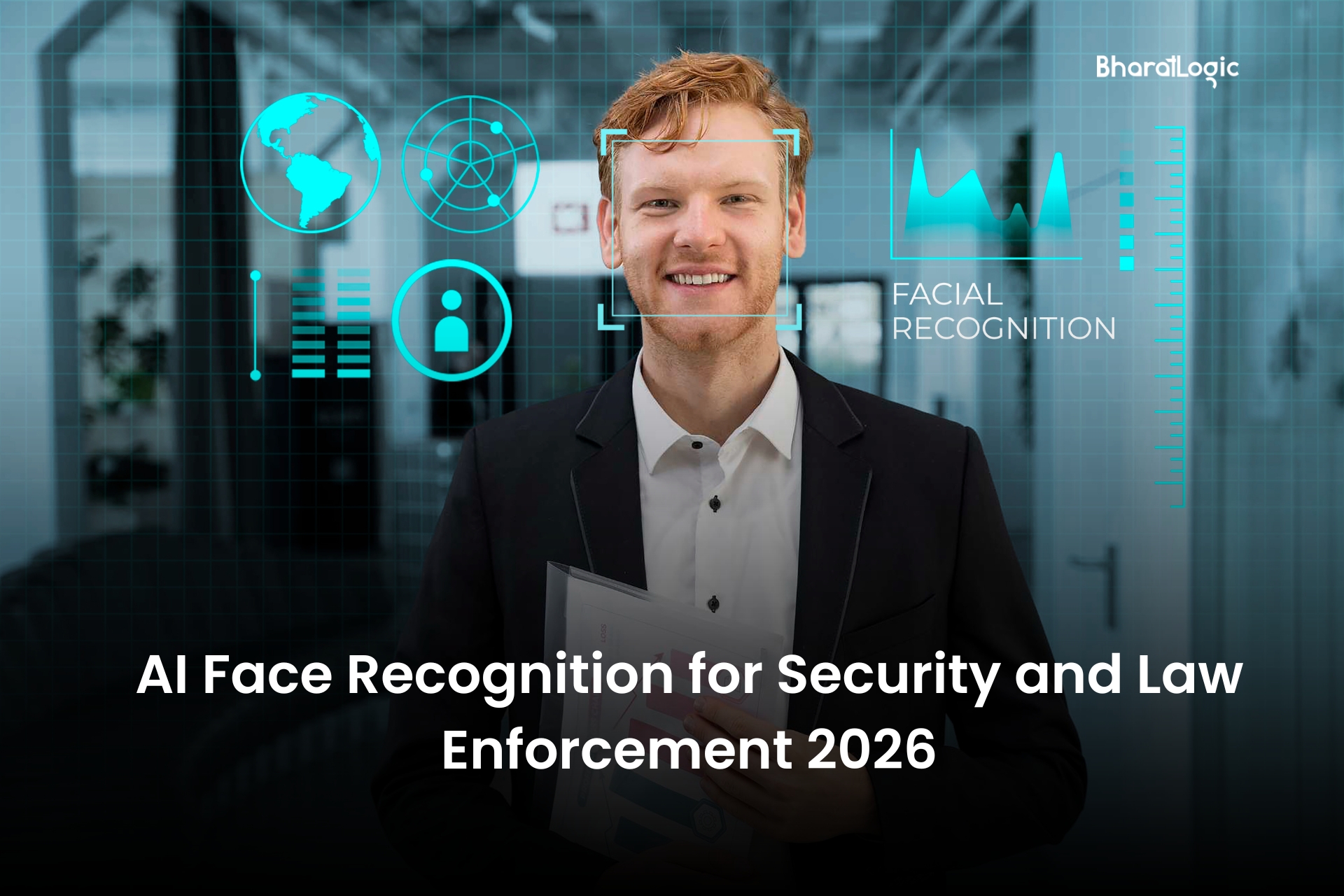
As we move into 2026, law enforcement agencies and security organizations are rapidly adopting AI-powered face detection  to overcome these challenges. Powered by advanced machine learning and computer vision, these systems can analyze live video feeds in real time, detect faces instantly, and match them against authorized or watchlist databases with high accuracy. This enables faster identification of suspects, improved crowd monitoring, and quicker response to potential threats while still keeping human officers in control of final decisions.

AI face detection is already proving valuable in areas such as airports, smart cities, border security, and large public events. When deployed responsibly, it can enhance public safety without replacing human judgment.

This guide explores how AI face detection technology works, the environments where it delivers the greatest impact, and best practices for ethical, secure, and practical deployment in 2026. By understanding its capabilities and limitations, organizations can adopt AI solutions that are both effective and trustworthy.

AI Call to Action

How AI Face Detection Works

How AI Face Detection Works

AI face detection uses advanced algorithms and machine learning models to analyze images and video streams efficiently. The process typically involves the following key functions:

● Detect human faces in images or video feeds

AI systems scan live or recorded footage to locate human faces within each frame. Using computer vision techniques, they can distinguish faces from backgrounds and other objects, even in scenes with multiple people or complex surroundings.

Read More about  How AI Agents Are Becoming the New Co‑Workers ? 

● Compare facial features against criminal or employee databases

Once a face is detected, the system extracts unique facial features such as eye spacing, facial contours, and bone structure. These features are converted into digital signatures and compared with existing databases, including criminal watchlists or authorized personnel records, to find potential matches.

● Identify individuals in real time or from historical footage

AI face detection can operate in real time, enabling immediate alerts and faster response to security threats. It can also analyze stored video footage to assist investigations, track movements, or verify identities after an incident has occurred.

Advanced AI models are trained on large and diverse datasets, allowing them to maintain high accuracy in difficult conditions. They perform effectively in low-light environments, crowded public spaces, and situations involving partial occlusion, such as masks, hats, or glasses. This makes AI face detection a reliable tool for modern security operations.

Practical Use Cases for Law Enforcement

Practical Use Cases for Law Enforcement

1. Criminal Identification

AI face detection enables law enforcement agencies to instantly match suspects captured on surveillance cameras against criminal databases and watchlists. By automating identity checks, investigators can significantly reduce the time spent on manual image reviews and cross-referencing records. This technology helps generate faster leads, supports active investigations, and improves the chances of identifying repeat offenders. When combined with human oversight, it strengthens investigative accuracy without replacing professional judgment.

2. Public Safety Monitoring

In high-traffic public areas such as airports, train stations, and city centers, AI face detection helps monitor known threats in real time. The system can trigger alerts when individuals on watchlists are detected or when missing persons are identified. This proactive monitoring allows security teams to respond quickly, prevent incidents, and enhance public safety while maintaining situational awareness across large areas.

3. Access Control in Secure Facilities

AI face detection improves access control by ensuring that only authorized personnel can enter restricted or sensitive locations. Unlike traditional badges or PIN codes, facial authentication reduces the risk of lost credentials or unauthorized access. The technology can also automate visitor management, logging entries and exits while maintaining a high level of security and operational efficiency.

4. Event and Crowd Surveillance

At large events and gatherings, AI face detection can track individuals across crowds without disrupting movement. This capability supports emergency response teams by quickly locating persons of interest, identifying potential threats, and coordinating faster interventions. The result is safer, more controlled environments during high-risk or high-attendance events.

Accuracy Improvements and Technology Advances

Accuracy Improvements and Technology Advances

Recent improvements in artificial intelligence have made face detection systems more accurate, reliable, and practical for real-world security applications. Key advancements include:

● Deep learning models handle variations in lighting, angles, and facial expressions

Modern deep learning architectures are trained on diverse datasets, enabling them to recognize faces under challenging conditions. These models perform well in low light, different camera angles, and with changing facial expressions, ensuring consistent identification in dynamic environments.

● Multi-camera tracking provides consistent identification across locations

AI face detection systems can now track individuals across multiple cameras and locations. This allows security teams to follow movement patterns without losing identity continuity, which is especially valuable in large facilities, transportation hubs, and smart city deployments.

● Integration with other sensors increases precision

By combining face detection with complementary technologies such as thermal imaging, motion sensors, and access control systems, AI solutions gain additional layers of verification. This sensor fusion improves detection accuracy and reduces errors caused by environmental limitations.

● Continuous updates reduce false positives and improve confidence

AI models are continuously refined through updates and retraining. These improvements help minimize false alerts, enhance matching accuracy, and build greater trust in the system’s results, supporting confident and responsible decision-making.

Deployment Tips for Law Enforcement

Deployment Tips for Law Enforcement

● Start with a pilot program in one department or location

Organizations should begin by deploying AI face detection on a small scale, such as a single department, facility, or controlled area. A pilot program allows teams to evaluate performance, accuracy, and operational impact before expanding deployment. This phased approach helps identify technical challenges early and ensures smoother integration with existing security systems.

● Combine AI with human verification for sensitive cases

AI face detection should support, not replace, human judgment. For critical or high-risk situations, trained personnel should always verify AI-generated alerts before action is taken. This reduces the risk of errors and ensures accountability in decision-making.

● Ensure data privacy compliance and ethical usage policies

Strong data governance is essential. Organizations must comply with applicable data protection regulations and establish clear ethical guidelines for data collection, storage, and use. Transparency and limited data retention help build public trust.

● Train teams to interpret AI alerts effectively

Security teams should be trained to understand AI confidence scores, alerts, and system limitations. Proper training ensures faster, more accurate responses and reduces overreliance on automation.

Read more Integration and training : What Founders Should Know Before Integrating AI into Products

AI face detection enhances human decision-making by providing timely insights while keeping final control in human hands.

How BharatLogic Helps

● Custom-built for your workflows

BharatLogic designs AI face detection solutions tailored to your specific operational needs. This ensures smooth integration with existing processes and minimal disruption to daily security operations.

● Affordable and scalable

The solutions are cost-effective and designed to scale effortlessly. Organizations can begin with a small deployment and expand across departments or locations as requirements grow.

● Integrated with existing systems

BharatLogic seamlessly integrates with current CCTV, access control, and security infrastructure, helping you maximize the value of your existing investments.

● Supported by dedicated teams

Experienced support teams assist with deployment, training, and ongoing optimization, ensuring consistent performance and reliability.

● Focused on practical, measurable results

The approach emphasizes real-world deployment, enabling faster implementation and delivering clear, measurable improvements in security and operational efficiency.