AI Agents and Voice AI for Enterprise Automation in 2026
AI Agents for Enterprise Automation

AI Agents and Voice AI for Enterprise Automation in 2026
Enterprises today are operating in an environment of increasing complexity. Customer expectations are rising, service channels are expanding, and internal systems must handle larger volumes of data and requests than ever before. Across customer support, operations, sales, and back-office functions, teams are managing repetitive, high-volume tasks that consume time and create operational strain. Manual processes not only slow productivity but also increase the risk of errors, delays, and inconsistent service delivery.

AI agents and Voice AI technologies are transforming how enterprises address these challenges. By automating routine interactions, handling common support queries, managing call volumes, and executing structured workflows, AI-powered systems enable organizations to improve response times and maintain consistent service quality. Voice AI agents can manage inbound and outbound calls, schedule appointments, and provide first-level assistance, while AI agents integrate with existing systems to automate tasks across departments.

Importantly, these solutions enhance operational efficiency without requiring additional headcount. Instead of replacing human teams, AI augments them freeing employees to focus on complex decision-making and higher-value work.

This guide explores how AI agents and Voice AI are implemented in real enterprise environments and outlines practical steps organizations can take to adopt these technologies securely, strategically, and at scale.

What Are AI Agents in Enterprise Automation

What Are AI Agents in Enterprise Automation

AI agents are intelligent software systems designed to understand instructions, interpret context, and take meaningful actions across connected digital environments. Unlike basic automation tools that follow fixed, rule-based scripts, AI agents can analyze information, make decisions, and adjust their responses dynamically. They are built to operate within complex enterprise ecosystems, where multiple systems and workflows interact simultaneously.

These agents can securely connect with CRM platforms, ERP systems, helpdesk tools, communication platforms, and internal databases through APIs. Once integrated, they can execute tasks such as retrieving customer information, creating or updating support tickets, processing transactions, generating reports, or modifying records in real time. This allows organizations to automate multi-step workflows without disrupting existing infrastructure.

A key differentiator is their ability to work with natural language. AI agents can understand written or spoken instructions, interpret intent, and respond conversationally. They also learn from previous interactions, improving accuracy and personalization over time. Rather than simply triggering predefined commands, they evaluate context such as customer history, priority level, or business rules before taking action.

By combining system integration, contextual decision-making, and natural language understanding, AI agents enable enterprises to streamline operations, reduce manual effort, and deliver faster, more consistent outcomes across departments.

What Is a Voice AI Agent

What Is a Voice AI Agent

A Voice AI agent is an AI-powered system that communicates with users over phone calls using natural, human-like speech. It can:

  • Answer incoming calls – Handles high call volumes efficiently without human intervention.
  • Collect customer information – Gathers details such as names, contact info, and account data accurately.
  • Schedule appointments – Books meetings or service calls automatically, reducing manual coordination.
  • Route calls based on intent – Directs callers to the right department or agent depending on their request.
  • Handle common support requests – Resolves routine queries like order status, account updates, or troubleshooting.

Voice AI enables enterprises to maintain consistent service availability around the clock. By automating repetitive and predictable tasks, it reduces wait times, improves response efficiency, and ensures a seamless customer experience. Human agents can then focus on more complex inquiries, while Voice AI handles first-level interactions reliably and at scale.

Where Enterprises Use AI Agents

Where Enterprises Use AI Agents

Customer Support Automation

AI agents efficiently manage frequent customer queries, including account details, policy information, order status, and request tracking. By handling these routine interactions, they reduce response times and ensure consistent service. Human agents are then freed to focus on more complex or specialized issues that require judgment and personal attention, improving overall support quality and customer satisfaction.

Internal Workflow Automation

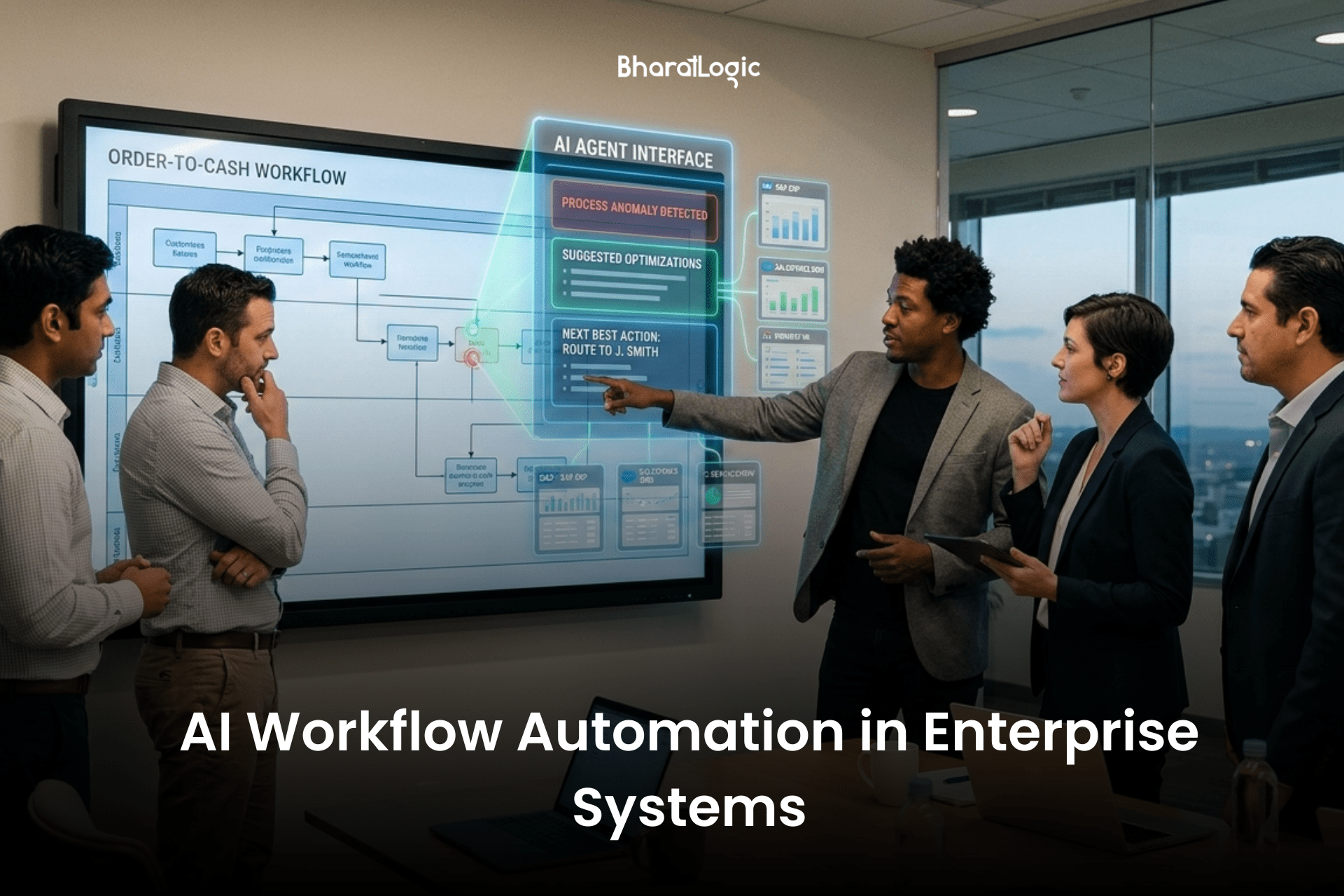
Repetitive internal tasks such as ticket creation, report generation, document handling, and data entry can be automated across enterprise systems. AI agents streamline these processes by connecting with CRM, ERP, and helpdesk platforms, ensuring that workflows run smoothly, accurately, and without delays. This reduces operational bottlenecks and allows teams to focus on strategic initiatives rather than manual administrative work.

Sales and Lead Qualification

AI agents can capture inbound leads, ask qualifying questions, and schedule meetings automatically. By handling these initial touchpoints faster than manual follow-ups, AI improves lead conversion rates and ensures that sales teams receive well-qualified opportunities promptly.

Voice Call Handling

Voice AI agents manage after-hours support, first-level troubleshooting, and appointment booking. They provide consistent, round-the-clock service, reduce wait times, and allow human agents to concentrate on complex calls. This combination of AI-driven automation and human expertise enhances operational efficiency and customer experience across the enterprise.

How AI Agents Integrate with Existing Systems

How AI Agents Integrate with Existing Systems

AI agents connect securely with CRM, ERP, databases, and communication platforms using APIs. This integration enables automation to operate seamlessly within existing workflows without replacing current systems. By working alongside the tools employees already use, AI agents streamline repetitive processes, reduce errors, and maintain business continuity while enhancing operational efficiency.

Business Benefits of AI and Voice Automation

  • Reduced manual workload – Automates repetitive tasks, freeing employees for higher-value work.
  • Faster response times – AI agents handle queries and workflows instantly, improving customer satisfaction.
  • Improved data accuracy – Reduces human error in records, reports, and system updates.
  • Better use of team resources – Employees can focus on strategic tasks instead of routine operations.
  • Scalable operations without added overhead – AI handles increased workloads without requiring additional staff.

Common Mistakes During Adoption

  • Starting without a clear use case – Leads to inefficient deployment and low ROI.
  • Using tools that do not integrate with existing systems – Causes workflow disruption.
  • Ignoring security and access control – Puts sensitive data at risk.
  • Expecting full automation without oversight – Human monitoring remains essential for quality and reliability.

Security and Compliance Considerations

  • Controlled system access – Role-based permissions to safeguard critical systems.
  • Encrypted data exchange – Ensures secure communication across platforms.
  • Audit logs and monitoring – Tracks actions for accountability and compliance.
  • Secure integrations – Protects data and prevents unauthorized access.

Build vs Ready-Made AI Tools

Build vs Ready-Made AI Tools

Ready-made AI tools provide enterprises with the advantage of quick setup and immediate deployment. They are often pre-configured for common tasks such as customer support automation, lead qualification, or basic workflow management. While these tools are convenient and require minimal technical expertise, they offer limited flexibility and may not align perfectly with an organization’s unique processes or systems. This can lead to gaps in functionality or suboptimal integration with existing workflows.

In contrast, custom AI agents are built specifically around an enterprise’s internal systems, workflows, and business rules. They can connect seamlessly with CRM, ERP, databases, and communication platforms, allowing automation to operate smoothly without disrupting existing processes. Custom AI agents are better suited for complex or large-scale operations, as they can adapt to specialized tasks, handle nuanced decision-making, and scale alongside the organization’s growth. Choosing a custom solution ensures long-term flexibility, reliability, and maximum operational efficiency.

How Enterprises Can Get Started

How Enterprises Can Get Started

1. Identify repetitive, high-volume tasks

Enterprises should begin by analyzing business processes to find tasks that are repetitive, time-consuming, and high in volume. Examples include data entry, ticket creation, routine customer queries, and standard reporting. By targeting these areas, organizations can achieve immediate efficiency gains and free up human teams to focus on more strategic work.

2. Map workflow dependencies

Before implementing AI, it’s crucial to understand how tasks interact across systems and departments. Mapping dependencies ensures that automation integrates seamlessly without causing disruptions. This step helps identify which processes rely on other systems, data inputs, or approvals, allowing AI agents to operate effectively within existing workflows.

3. Deploy a pilot AI agent

Start with a small-scale deployment by introducing an AI agent for a specific workflow or department. A pilot allows teams to test performance, understand system integration needs, and make necessary adjustments before scaling up. It also minimizes risk and provides measurable results.

4. Monitor accuracy and performance

Track how well the AI agent completes tasks, responds to queries, and interacts with systems. Monitoring key metrics such as error rates, task completion time, and user satisfaction ensures that the AI is delivering value and identifies areas for improvement.

5. Expand automation gradually

Once the pilot proves successful, gradually scale AI deployment to additional tasks, teams, or departments. This phased approach allows enterprises to maintain control, ensure smooth integration, and optimize the automation strategy for long-term success.

Conclusion

AI agents and Voice AI are no longer experimental they are practical tools driving efficiency in enterprises. These intelligent systems automate routine tasks, streamline workflows, and manage customer interactions with accuracy and speed. AI agents reduce manual workload, allowing human teams to focus on complex, high-value activities. Voice AI handles calls, schedules appointments, provides first-level support, and routes requests based on intent, ensuring consistent service quality. Organizations that adopt structured AI automation benefit from faster responses, improved data accuracy, and scalable operations. By integrating AI thoughtfully, enterprises can handle growth efficiently while maintaining reliability and operational excellence.

Custom AI & Voice Solutions for Your Enterprise

BharatLogic builds custom AI agents and Voice AI solutions tailored to your business and existing systems. Project scope and pricing are designed to fit your unique needs.